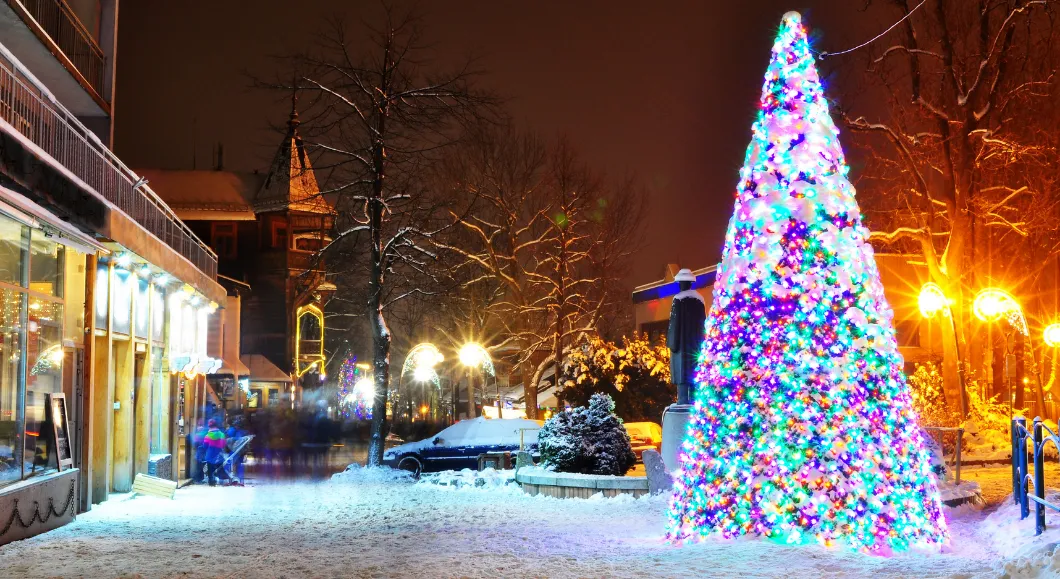
What should you see on Krupówki? Zakopane’s main pedestrian street packs the town’s history into about a kilometre: the Rówień Krupowa park with its view of Giewont, the historic Sokół building, the Tatra Museum, the stone Church of the Holy Family and, just beyond the lower end, the market and the Gubałówka funicular. It is also crowded, noisy and commercial, so it pays to know where to look. This guide walks you from one end to the other, with the best stops, nearby detours and tips for the quietest times.
What to see on Krupówki at a glance
Krupówki runs gently downhill from the Rówień Krupowa park to the junction with Kościeliska Street, a few minutes’ walk from the market and the Gubałówka funicular. The name comes from the Krupa family, whose pastures once lay here. In the second half of the 19th century, when Zakopane became a health resort, it turned into the main promenade for visitors. Since 2016 the street has been protected as a cultural park, with rules limiting advertising and street trading.
| Stop | What it is | Time |
|---|---|---|
| Rówień Krupowa | Park with a view of Giewont and the Zakopane sign | 15–30 min |
| Sokół building | Historic cultural centre | 5 min |
| Tatra Museum | The region’s main museum, since 1888 | 1–2 hours |
| Church of the Holy Family | Zakopane’s oldest brick church | 10–15 min |
| Market below Gubałówka | Stalls with cheese, wool and woodwork | 20–40 min |
| Gubałówka funicular | Ride to the viewpoint above town | 1–2 hours with the top |
The upper end: Rówień Krupowa
Start in Rówień Krupowa, the largest green space in central Zakopane, next to the upper part of Krupówki. It was once a shepherds’ meadow; today it has walking paths, a playground and a clear view of Giewont, the peak whose outline locals compare to a sleeping knight. The wooden Zakopane sign here is the town’s favourite photo spot. In winter, when there is enough snow, a marked cross-country ski track crosses the park.
Watching the street
From the park, walk down Krupówki. Much of its appeal is simply people-watching: horse-drawn carriages (sleighs in winter) waiting for passengers, buskers, highland-style wooden houses squeezed between modern shops and the mountains appearing between buildings. Look up from the shop windows to see original wooden balconies and carvings.
The lower end: the Sokół building, the Tatra Museum and the church
Sokół building
At Krupówki 12, the red-brick Sokół building was one of the first in Zakopane built in brick, and it quickly became the centre of the town’s cultural life. It is still used for culture and entertainment, and its façade is a reminder of how Krupówki looked before the souvenir shops arrived.
Tatra Museum
Next door, the Tatra Museum’s main building at Krupówki 10 has been the region’s most important cultural institution since 1888. If you visit only one museum in Zakopane, make it this one. Its ethnographic rooms recreate highland interiors from the 19th century, and other galleries cover Tatra nature, folk costume and the early history of mountain tourism. Plan one to two hours, and check opening hours and prices before you go, as they vary by season and building.
Church of the Holy Family
At the lower end of Krupówki, by the junction with Kościeliska Street, stands the stone Church of the Holy Family, built between 1877 and 1899. It is the oldest brick church in Zakopane and mixes a neo-Romanesque design with Zakopane-style details. Step inside for the painted decoration and a few quiet minutes away from the crowds. Please respect services in progress.
Beyond the lower end: the market and Gubałówka
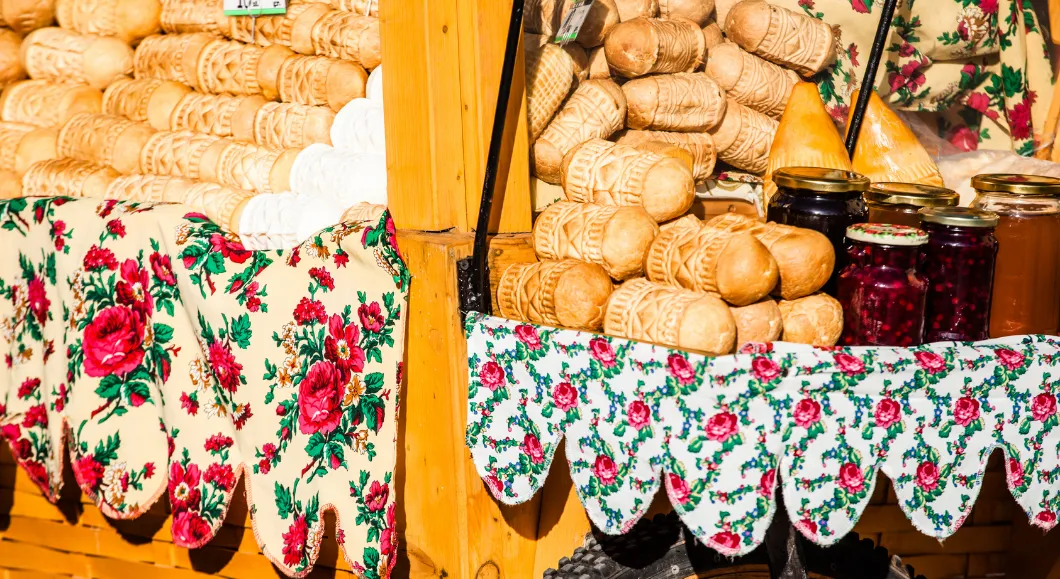
A few minutes beyond the church, a large market spreads out around the lower station of the Gubałówka funicular. Among the stalls you will find wool blankets and slippers, carved wooden boxes, leather goods and, above all, cheese: smoked oscypek, mild bundz and small redykołka shaped like animals. Try grilled oscypek with cranberry sauce while it is hot.
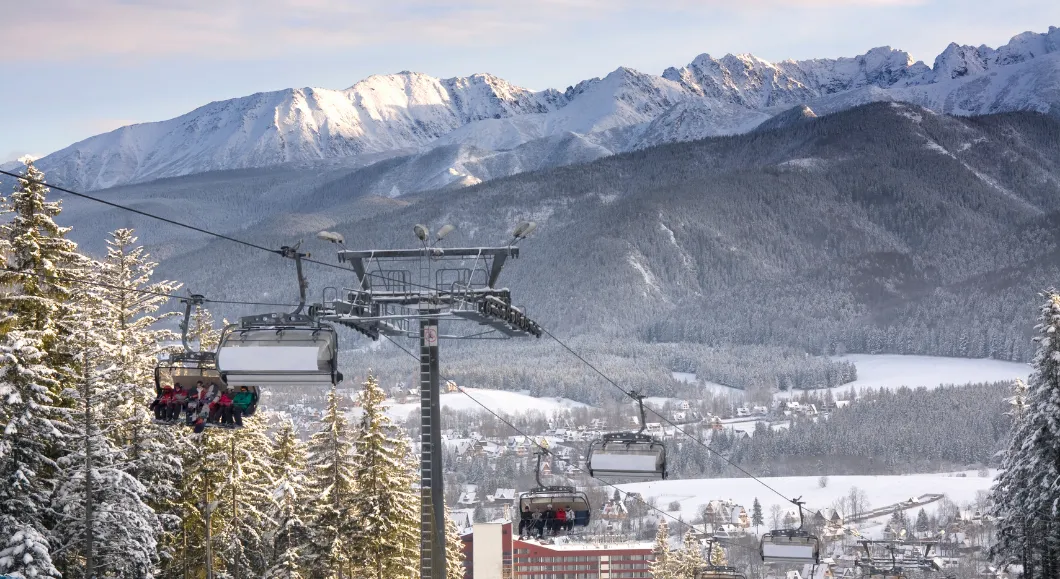
From here, ride the funicular or walk up Gubałówka (45–60 minutes) for the view of the whole Tatra range. Late afternoon is the best time, when the low sun lights the mountains.
Detours worth a few extra minutes
- Old Church and Pęksowy Brzyzek cemetery on Kościeliska Street, a few minutes from the church at the lower end of Krupówki: a small wooden church and one of Poland’s most atmospheric cemeteries, with carved wooden grave markers and the graves of many artists and mountaineers.
- Villa Koliba, also on Kościeliska Street: the first house built in the Zakopane style, now the Museum of Zakopane Style.
- Villa Oksza: a Zakopane-style villa now housing the Tatra Museum’s gallery of 20th-century art.
- Villa Atma: a wooden house where the composer Karol Szymanowski lived, now a museum devoted to him.
Eating and drinking on Krupówki
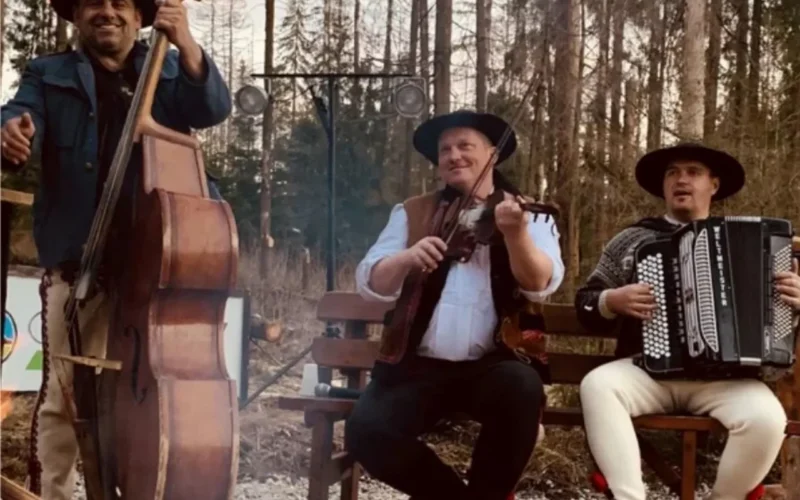
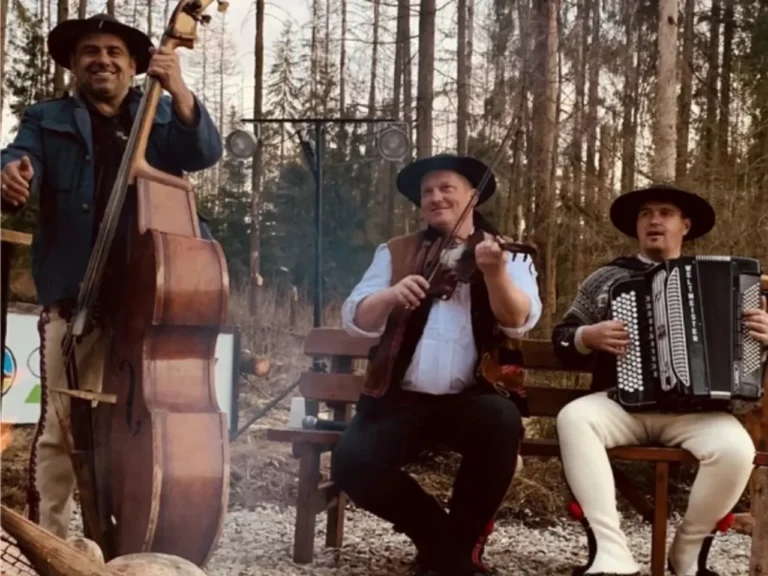
Krupówki is lined with wooden taverns, many with live highland music in the evening. They are convenient and atmospheric, but usually pricier than places one or two streets away. Order kwaśnica (sour sauerkraut soup) or placek po góralsku (potato pancake with goulash) to try the local classics.
For a more relaxed evening than a busy street restaurant, our highlanders’ feast in Poronin includes transport from Zakopane, unlimited regional food, a live band and a bonfire in a hillside hut.
Tips for visiting Krupówki
- Go early or late: before 10 am the street is calm, and the shops are just opening. In the evening the lights and music make it lively; from late morning to late afternoon it is busiest.
- Look beyond the souvenirs: for real handicrafts, ask where items were made and look for regional workshops rather than mass-produced goods.
- Watch your belongings in the crowds, especially at weekends and during holidays.
- Combine with Gubałówka: walk down Krupówki in the afternoon and finish with the sunset view from the ridge.
- In winter, wear shoes with grip: the pavements can be icy and packed with snow.
A two-hour Krupówki walk
- Rówień Krupowa: the Giewont view and a photo at the Zakopane sign.
- A slow walk down Krupówki to the Sokół building.
- The Tatra Museum, if you have time for a visit.
- The Church of the Holy Family, with a quick look inside.
- The market below Gubałówka and grilled oscypek.
- The funicular up Gubałówka for the view.
FAQ
How long is Krupówki?
The main pedestrian section is about a kilometre long. Walking it without stops takes 15–20 minutes, but most people spend one to three hours with stops.
Is Krupówki worth visiting?
Yes, especially for the Tatra Museum, the church, the market and the views of Giewont and Gubałówka. It is very commercial, so pair it with a quieter detour such as the Old Church and Pęksowy Brzyzek cemetery.
When is Krupówki least crowded?
Early in the morning and on weekdays outside holiday periods. Weekend afternoons, Christmas, New Year and the winter school holidays are the busiest times.
What can I buy on Krupówki?
Sheep’s cheese, wool blankets and slippers, woodwork and leather goods. For quality handicrafts, look for local makers rather than mass-produced souvenirs.
Is Krupówki suitable for children?
Yes. The park at Rówień Krupowa has a playground, the street is car-free, and the market and Gubałówka funicular are popular with families.