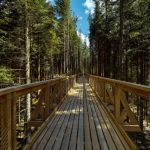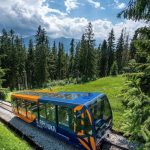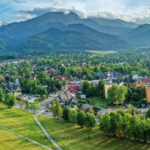

Hiking in the Tatra Mountains near Zakopane offers some of the most dramatic and rewarding experiences in Central Europe. As the centerpiece of the Tatra National Park, these peaks and valleys cater to everyone, from families looking for a gentle afternoon stroll to seasoned mountaineers seeking a challenging ascent. Safety and preparation are key, so always check the weather and wear appropriate gear before setting out.
Easy Trails: Family-Friendly Walks
If you are new to hiking or traveling with young children, Zakopane has several stunning, accessible options. The Chochołowska Valley is one of the longest and most beautiful valleys in the Tatras. The path is wide and relatively flat, making it ideal for walking or cycling (in certain areas). The gentle $7\text{ km}$ walk takes you through meadows and forests, culminating in a popular mountain hut (Schronisko) where you can stop for refreshment. It is particularly magnificent in the spring when the valley floor is carpeted with purple crocuses. Another excellent choice is the Kościeliska Valley, offering a similar accessibility level but with added attractions like the historic Zbójnicka Kapliczka (Outlaw’s Chapel) and access to several easy caves, such as the Smocza Jama (Dragon’s Den).
Moderate Trails: Iconic Views and Accessible Heights
For those seeking a little more effort for a bigger reward, the moderate trails strike the perfect balance. The route to Morskie Oko (The Eye of the Sea) is the most famous example. While the paved path from Palenica Białczańska is long (around $8\text{ km}$ one-way), the effort is highly worthwhile, delivering unparalleled views of Poland’s largest and most beautiful lake, encircled by towering peaks. This route takes approximately $2\text{ to }2.5\text{ hours}$ one way. A slightly more challenging but deeply rewarding option is the hike up Dolina Pięciu Stawów Polskich (Valley of Five Polish Lakes). While it requires a steeper climb, the views of the pristine glacial lakes and surrounding jagged ridges are nothing short of breathtaking.
Challenging Trails: For Experienced Mountaineers
These routes demand excellent physical fitness, proper gear, and no fear of heights. They are often exposed and can involve scrambling or using fixed chains for assistance. The ascent of Giewont, the famous “sleeping knight” peak, is the most popular challenge. The final section requires climbing with chains and offers incredible views, but it can be extremely crowded. Caution: Giewont is prone to dangerous lightning strikes, so never attempt the final climb if there is any threat of a storm. For the ultimate test, the route up Rysy (reaching $2,499\text{ meters}$ on the Polish side) is a serious alpine undertaking. It involves chains, steep rocks, and high exposure. Preparation is critical for this full-day expedition.
Essential Hiking Safety Tips
Always remember to follow the rules of the Tatra National Park. Wear sturdy hiking boots, carry plenty of water and food, and pack extra layers, as mountain weather can change dramatically within minutes. Never leave the marked trails, and ensure you start your hike early enough to return before dark, especially during the shorter days in autumn and winter. Purchase a detailed map and consider checking the webcam conditions and weather forecasts published daily by the rescue service, TOPR (Tatrzańskie Ochotnicze Pogotowie Ratunkowe).